
“Let us have faith that right makes might, and in that faith let us, to the end, dare to do our duty as we understand it.”
— Abraham Lincoln
Political life often proceeds as if the opposite principle governs.
If we conclude—wrongly—that might makes right, we lose the ability to judge ourselves according to moral principle. Power without constructive purpose is no better than intellect without discipline. The question of what is right must come first. Only then can power be used justly.
Modern public life frequently reverses that order. Power gathers around those who command attention, mobilize supporters, sell outrage, or control institutions. The loudest argument begins to look like the strongest one, and the heckler’s veto embeds itself in systems of information—eroding truth and meaning.
When public voices are justified by ends rather than means, status, reach, platform, and official recognition by self-reinforcing elites begin to corrode legitimacy and fracture trust. The loudest attention-seeking voices are rarely the ones that leave a lasting impact. They may succeed for a season, but they rarely endure.
But history rarely settles matters by popular opinion for long.
Time and again societies discover—often at great cost—that force by itself is unstable. Authority disconnected from justice eventually weakens and dissipates. It may take years, sometimes generations, but the strain reveals itself: institutions stop functioning, public trust erodes, conflicts become intractable, and people grow fatigued by pervasive dishonesty.
That tension is one of the reasons I am engaging here.
I am interested in the forces that shape public life but are often discussed only in fragments or caricature: politics, culture, institutions, media, technology, belief. Together they form a system that shapes how truth itself is understood. Each sphere affects the others, and when their interdependence is ignored or poorly balanced, the public misreads what is happening around them.
Many of the arguments dominating public discussion today feel incomplete. We sense it, even when we cannot immediately explain why. When we do recognize the gap, we wonder why no one has challenged the fallacy so clearly distorting our understanding of events. Some assume politics is nothing more than a contest of power. Others assume good intentions alone are sufficient to sustain a society. Both views leave out something essential.
A free society depends on a delicate balance. Institutions matter. Incentives matter. Culture matters. Truth matters. Remove or weaken any one of them and the system begins to drift.
The American republic was built with that complexity in mind. Its designers did not expect perfection. They expected disagreement, ambition, faction, and error. What they hoped was that the structure of the system—and the character of the people within it—would prevent those forces from becoming destructive.
Whether that hope remains justified is an open question.
Technology has changed the speed and scale of communication. Media environments reward conflict more than reflection. Political incentives push leaders toward escalation rather than restraint. Under these pressures it becomes easy to forget the deeper reasons behind our actions—and whether our public roles still align with our convictions.
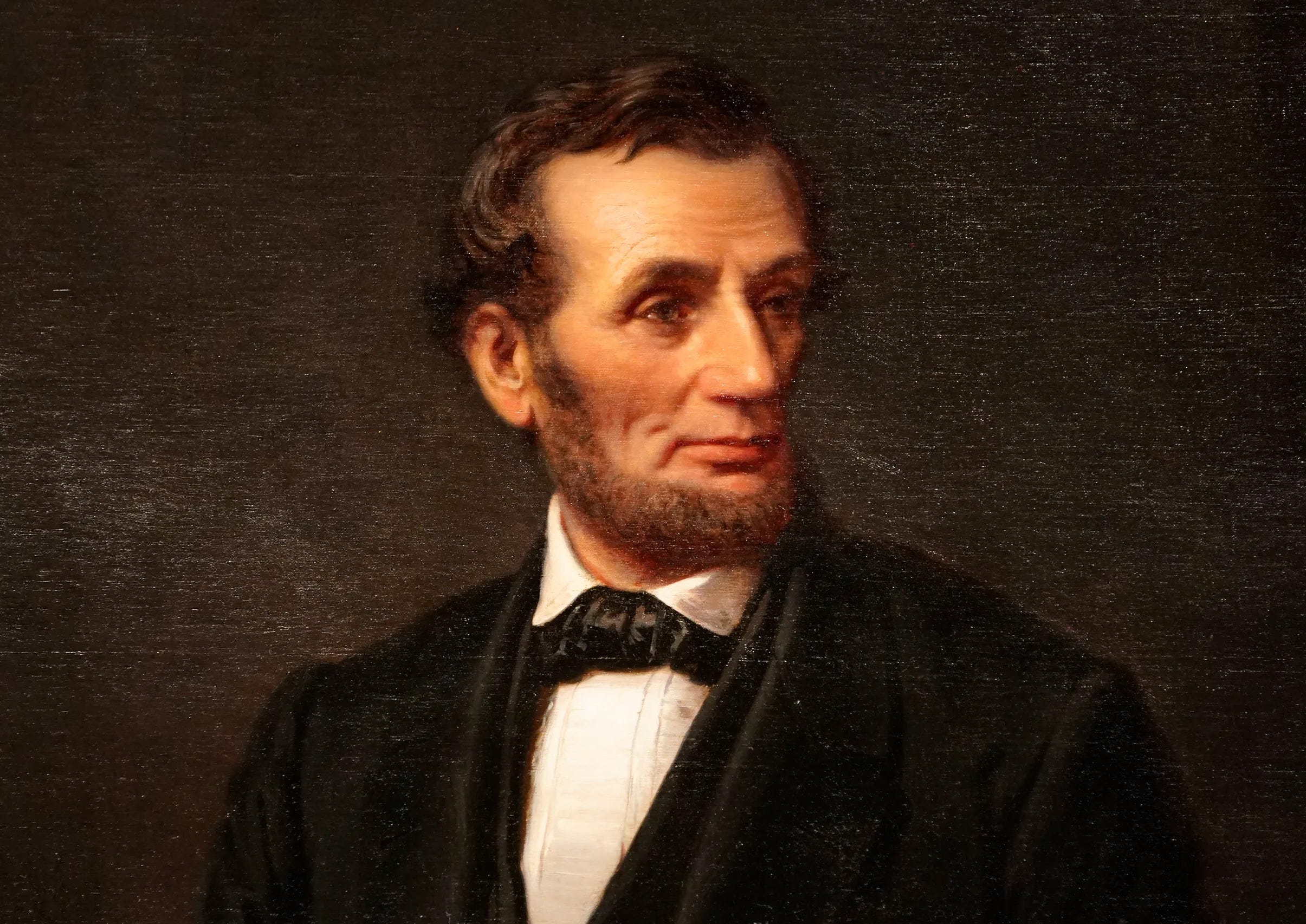
Lincoln’s words point us back to the foundation.
If right truly makes might, then legitimacy matters more than immediate victories. Truth cannot be treated as optional. Institutions cannot survive indefinitely if they abandon the principles that justify them. Means must remain congruent with the ends we claim to seek, not reduced to tactical mechanics or redefined whenever convenient.
These are not abstract concerns. They affect how people trust one another, how governments make decisions, and whether disagreements remain political rather than becoming something far worse. Lincoln understood this, and he lived to see it. Without his wisdom and resolve, the alternative course of history is difficult to imagine.
This publication is an attempt to think carefully about difficult questions.
Not to win arguments for their own sake, and not to add to the noise that already fills the public square. The aim is simply to examine the forces shaping our common life and to ask where they are leading. Once we do that, clearer judgment—and better action—become possible.
Clear thinking does not solve every problem immediately. But without it, problems accumulate quietly until they are much harder to address. The first rule of holes is simple: stop digging. I am determined to do just that.
Lincoln’s statement is not comforting. It is demanding. It implies responsibility in an age that often prefers entitlement to duty. It calls us to align thought and action with considered reason.
If right makes might, then success measured purely in terms of power cannot be the final measure of anything. Duty requires us to ask the harder question: are the things being thought, said, or done, actually right?
That is the motivation behind the reflections that will appear here. I hope you will join me.